The Eight Disciplines of Problem Solving in Modern Engineering
Modern engineering often uses systems from the physical world to ensure reliability. Project management adopted Kaban from Toyota, we adopted 8D from FordThe Ford Motor Company first created the 8D method to improve quality control in the late 1980s. When a system hardly fails, a simple review of the event is often not enough to prevent it from happening again. These reviews often lack a clear structure and result in vague conclusions that do not help the team improve. To handle complex failures that involve people, hardware, and software, many organizations use the Eight Disciplines (8D) method. This is a problem-solving system that started in the car industry. It is based on the following idea
big failures are usually caused by a chain of small mistakes rather than one single event.
The 8D method changes how a team looks at a problem. It starts by gathering a group of concerned people and quickly working to stop the issue from getting worse. This step is called containment. It is crucial because it protects the user from further harm while the investigation is still ongoing. This might involve turning off a specific function or using a temporary workaround to keep the system safe. By doing this, the team ensures the system is not vulnerable while they search for the root cause. Unlike a standard review that looks for long-term lessons immediately, 8D requires a documented plan to stop the damage in the short term.
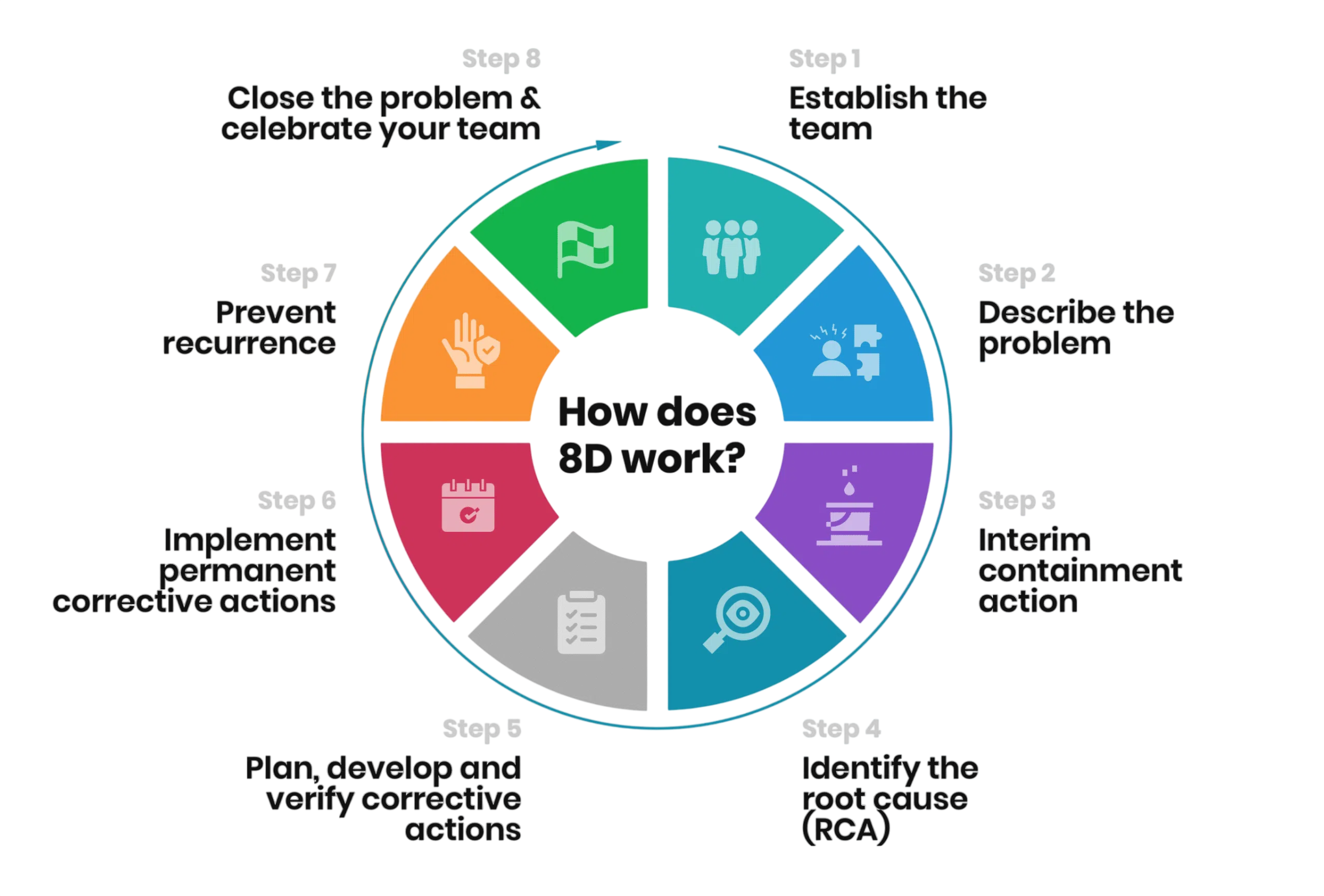
The real power of the 8D system is how it identifies why a problem occurred. In many technical fields, people often stop after finding a symptom, like a server error or a broken part. The 8D structure forces a team to look for the escape point. This is the specific part of the quality check process where the error was allowed to pass through without being noticed. By figuring out why a test was missing or why a human error was not caught, the team can fix the entire system instead of just patching one errorThe Swiss Cheese Model shows that accidents happen when several layers of defense all fail at the same time. This approach moves the focus from fixing a single mistake to fixing the culture and the processes that created the mistake.
Finally, the 8D framework makes every step of the process clear and easy to track. Because the method is standardized, everyone involved can understand the progress. Every task has a specific owner, a deadline, and a requirement for proof. The team must verify that their fix actually works as intended before the process is finished. This level of detail is very important for companies that must follow strict safety rules or official quality standards. By following these steps, an organization does more than just solve a problem. It builds a cycle of constant improvement that makes the entire operation more reliable over time.